This Giving Season, Help Us Fund One More Scholar
Author: Marie Strawser, UMSA Managing Director
November 16, 2026
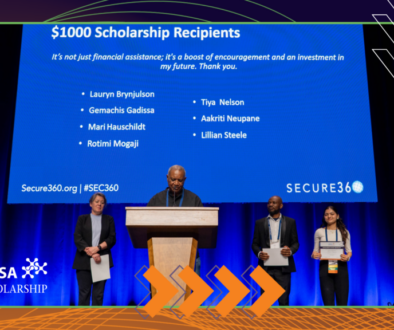
This spring, 121 students from across the Upper Midwest asked the UMSA Foundation for help paying for an education in security, continuity, and risk.
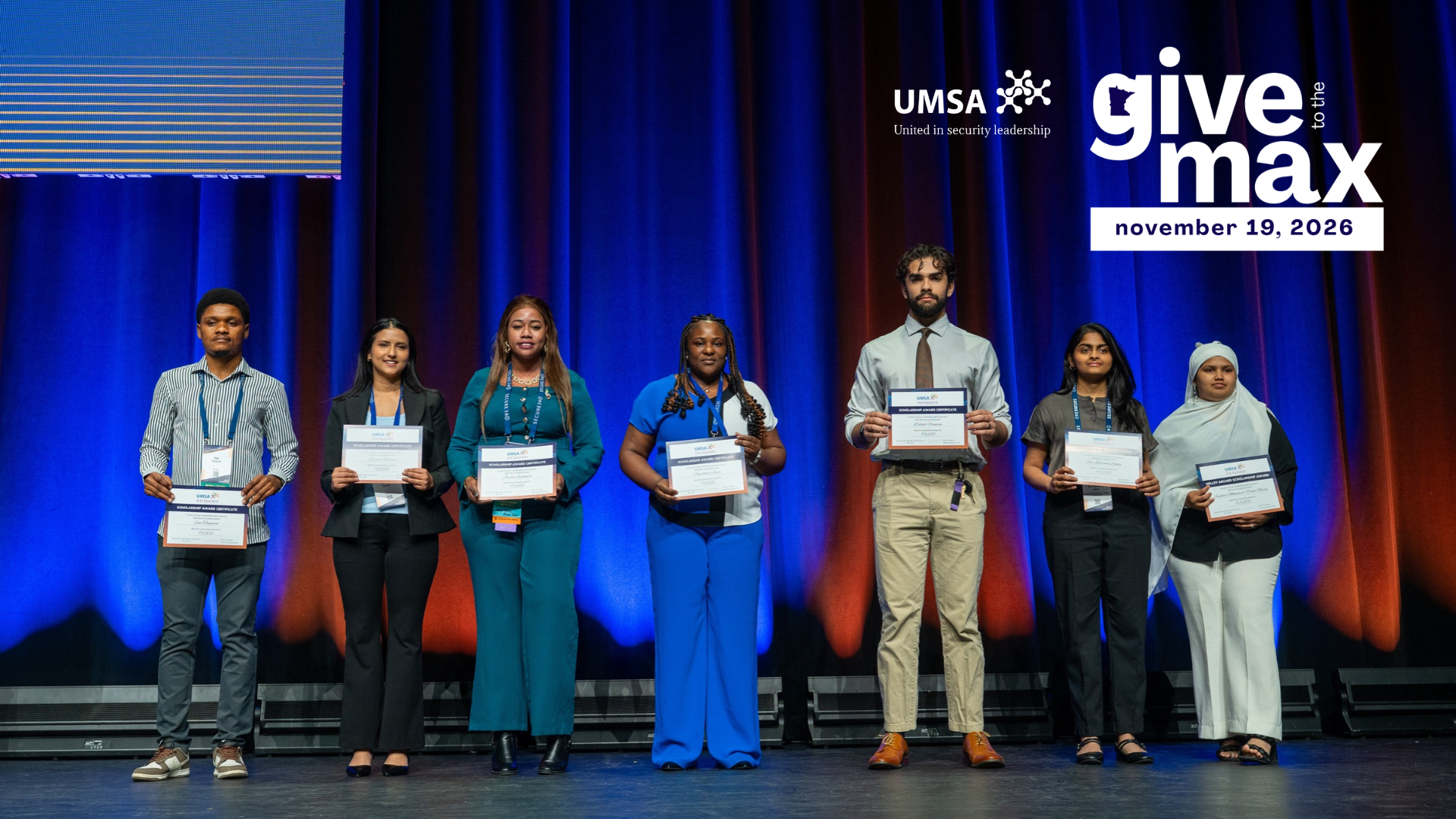
We were able to fund 12 of them.
That’s not a typo, and it’s not a knock on the other 109. It’s simple math. Our 2026 scholarship program awarded four $3,000 scholarships and eight $1,000 scholarships, totaling $16,000. Every dollar went to a deserving student, but demand was nearly ten times what we could meet.
The good news is that this gap closes one gift at a time. Here’s who is waiting, and what your gift can do for them.
Who applied
The students who applied this year are exactly the people our industry says it can’t find enough of.
- They’re local. 115 of the 121 applicants live in Minnesota, Wisconsin, Iowa, North Dakota, or South Dakota. They’re training at schools like St. Cloud State, Metro State, Hennepin Tech, Dunwoody, and Minnesota State College of Southeast Technology, the same places our members hire from.
- They’re focused. Most are studying cybersecurity. Others are pursuing business continuity, governance, risk and compliance, network security and data science.
- They’re strong students. Applicants reported a GPA average of about 3.5, and more than half were at 3.5 or above.
- They’re just getting started. 93 are already in college or a training program. 28 are high school seniors deciding right now whether this career is within reach.
What they told us
We read every essay, and a few themes came up repeatedly. At least 31 applicants wrote about tuition costs, and 11 wrote about loans or debt. At least 10 are the first in their family to go to college. Several work part-time or full-time while carrying a full course load, and others are veterans or come from military families.
Many wrote about certifications they’re saving up for and internships they hope to land. These are the steps that turn a student into a working security professional. Too often, they’re also the first things cut when money runs short.
What “not funded” really means
When a qualified student doesn’t receive a scholarship, they don’t usually quit. They pick up more shifts, take one fewer class, or skip the unpaid internship or the certification exam. They graduate later, with more debt and less experience.
Meanwhile, employers across the region continue to post security roles they can’t fill. The talent is here. In many cases, it’s a few thousand dollars short of getting there.
What your gift can buy a student
A career in security is built on more than tuition. It’s also built on the exam fees, books, lab time, and conference passes that turn classroom knowledge into a job offer. Every gift has a job to do.
Your gift |
What it can cover for a student |
|
$25 |
Certification study materials or practice exams to prepare for a first cybersecurity credential |
|
$50 |
A month of hands-on cybersecurity lab access and practice resources |
|
$100 |
A portion of the textbook and course material costs for a college course |
|
$250 |
Travel help to attend a regional security conference and meet employers |
|
$440 |
One CompTIA Security+ certification exam voucher, a widely recognized credential for aspiring cybersecurity professionals |
|
$1,000 |
One full UMSA Foundation scholarship |
|
$3,000 |
One of our top scholarship awards, about a quarter of a year’s average in-state tuition at a public four-year university |
Why the small things matter
Certifications open doors. Many entry-level security job postings ask for a credential like Security+. At roughly $425 per attempt, the exam fee alone can put it out of reach for a student already stretching to cover rent and tuition.
Books, labs, and conferences build careers. Hands-on lab practice is where security and continuity skills actually stick. Events like Secure360 are where students meet mentors and land interviews, and a single hallway conversation can lead to an internship.
Tuition is still the biggest hurdle. Average in-state tuition and fees at a public four-year university reached $11,950 for 2025–26. A $1,000 or $3,000 scholarship won’t cover it all, but it can mean fewer work hours, fewer loans, and more time to learn.
Small gifts add up to big yeses
You don’t have to fund a whole scholarship to change a student’s year. Every gift is pooled into our scholarship fund. Forty $25 gifts fund one scholarship, and so do ten $100 gifts.
A few ways to stretch your gift:
- Ask about a match. Many employers match charitable gifts, so your $100 could become $200.
- Give together. Rally your team, your security group, or your Secure360 colleagues to fund a $1,000 scholarship together.
- Give in honor of someone. Celebrate a mentor, a retiring colleague, or a new graduate with a gift in their name.
The 2027 application cycle opens soon. Last spring, 109 qualified students heard “not this year.” Let’s shrink that number in 2027.
Help us fund one more scholar. Donate to the UMSA Foundation scholarship today.
Sources consulted:
- Tuition: College Board, Trends in College Pricing 2025 ($11,950 average in-state tuition and fees, public four-year, 2025–26)
- Textbooks: Average required course material spending was $338 in 2025–26, per NACS.
- Conference travel: CornCon 2026 two-day registration started at $120.
- Security+ voucher: About $440 list price per ExamCert’s 2026 cost guide.